Showing posts with label community. Show all posts

19 February 2017

If You Don't Love Our Students, Please, Just Leave

Like most of St. Louis school districts (and the US?), my district had professional development this past Friday, giving the kids a 4 day weekend and everyone else 3 days off. 
For the most part, I always enjoy these days because they give me a chance to present things I love (or at least like LOL), see my equally-passionate colleagues from other buildings in the district, AND go out to lunch like “normal” jobs. 
All was going well Friday – we didn’t get through all of my activities in the 1st session, but we were productive, Bethany won the “Bubblesheet Champion” trophy in the ACT math session, and I was somewhat interested in the session I’d signed up to attend about using our online textbooks with close reading. I’ve come to the opinion that my students generally need a screen BREAK most days, so I purposefully do my readings on paper, but I’m always of the mindset that you might convince me otherwise.
Whatever is best for the kids.
It was in this setting that I wound up overhearing a teacher from one of our other schools go on for what felt like 15 minutes about how his horrible kids will never read anything, and that they’re all a bunch of gang wanna-bes, who play out the pecking order of the streets by making kids sharpen their pencils and get them pieces of paper.
I have some tough kids this semester, too. I get the frustration of coming to work most days and just praying that today, just maybe, will be one of those days they cut you some slack and you don’t have to feel like you’re throwing the toolbox of tricks at them to get anything back.
I, too, know that frustration of kids just staring at me while I’m waiting for more than 1 or 2 kids to engage in my class discussion. “LET ME TEACH YOU!” is what I  passionately internalize (and sometimes that sneaks out audibly).

BUT.

Most days, as I’m reflecting on the day’s lesson, I might be frustrated that so and so did this and that, but at the end of the day, this is my job, and these are my kids. You might call it “fate,” or “destiny,” or “your department chair’s wrath upon you,” – I would call it God’s will – but ultimately, something put you and those kids together, so it’s your job as the teacher to figure that out. 
(Yes, it would also be terribly kind and helpful if the students did their “job” and exhibited their good “student” behaviors, but as I tell my own children and kids at school, YOU control what YOU can do.)
I thought I was just going to leave the session feeling sad for those students that this man with years of classroom experience could only blame his gang wanna-bes, but as he left the room at the end of the day and several of us found a typo on a website, he left his final impression upon us with, “must’ve been a grad from our district.” 
If you don’t love our students, please, just leave. 
Was there anything objectively wrong with that statement? Maybe not – it’s no secret that our state test and ACT scores are in the bottom of the barrel, but it was the way, he said it. In a “Can anything good come from Nazareth?” kind of way. 
Perhaps this gentleman just had a particularly tough week, and if I were to see him again next August he would be filled with wonder and excitement for the coming school year, like the vast majority of teachers. Some years we just get more beat down than others. So if he or someone he knows has figured this out and tracked him down, please understand that I know I may be dangerously generalizing his attitudes.
It speaks to the larger discussion coming upon our struggling schools every year about this time, though. “I heard so and so is leaving to go to _______. They didn’t want to deal with ______ anymore.” Sometimes ______ is administration. Sometimes ______ is bureaucratic paperwork stuff we have to do to prove that we are actually teaching (or attempting as much). Those blanks disappoint me, because those are leadership failures, in my opinion. But sometimes ______ is the students we serve. If you are a teacher who needs to leave for greener pastures because of the kids, please know that I love you, but I’m not going to bemoan your decision. 
If you don’t love our students anymore, please, just leave. 
I would much rather be in the trenches with someone who (still) has their heart in the fight. We can cry together. Together we can try plan B, C, D, E, F, G, etc, because our love for these God-ordained students is too much to have tried “everything.”
Our students can be troubling, they can be apathetic, but they can also be inspiring, and passionate, and brilliant, if you know where to look and never stop seeking that out.

10 April 2016

The System is BREAKING, for Many it is ALREADY Broken: A #MLTSfilm Review

My district is hosting a screening of the education documentary Most Likely to Succeed on Thursday, April 14 - its something I've been anticipating since I first saw this film last December at Mehlville HS (Get your FREE tickets here!)


The basic premise of the film is that US industrial education model that was developed at the end of the 19th century to develop a moderately literate, instruction-following, factory-ready workforce is obsolete and killing us. The filmmakers then show us a way out, specifically highlighting the work done by teacher-innovators and their students at High Tech High in San Diego, CA.

One of the most poignant moments of the film for me is when we see one of the school's parents admit that although she's nervous about what exactly her daughter is learning at the project-based learning school, she acknowledges that her friends' kids are often coming back from prestigious universities with prestigious degrees and having a hard time finding work. 

It's a growing cultural theme - the promise of college = great job is waning, if it's not already dead.

But is this really new, or is it new for the more privileged in our society, making it finally apparent to many more in power? 

The filmmakers give a lot of stats midway through the film about how much knowledge is lost in only a few months from taking a random test, that its nearly impossible to learn US history meaningfully in an AP US History course, and that good grades and good test scores don't exactly correlate into creative, independent, resourceful workers for firms looking for innovation.

Now to my point - urban and rural communities that are ALREADY struggling to keep up with affluent suburbs already know these things. They already know that the test system is rigged and meaningless for them. They already see their best leaving. 

Poor urban and rural communities that MOST need the spirit of innovation and entrepreneurism that this film advocates for our students need most to run with this revolution of what "school" looks like, but face more challenges in grabbing the ring. We see many of the parents point out in the film: "We don't know that this will really work! I'm nervous!" but they take the risk anyway, because their communities and families can risk the failures required of innovation. 

If you have any commitment to a community with a failing or struggling school, I implore you to support leaders who will take risks of innovation, rather than promising that we can do more of the same and eventually catch up. 

Thursday night is the 3rd time I will have seen Most Likely to Succeed, and I am more convinced with each viewing that we owe these experiences to all children. We need teachers who refuse to teach toward any test (AP exams included). We need administrators who will value We need parents who demand their children do more at school than study for tests of knowledge acquisition. We need university partnerships willing to train our current and future teachers in the messy process of nurturing creative processes and innovative, iterative learning environments. We need politicians who will make room for this innovation. We need cooperation between all of these.

One of my favorite things about this movie is that rather than only reminding us again that education is broken it shows us a way out and gives us a call to action we can use to galvanize communities around the change.

I'll leave your with a sit-down interview from Sundance Film Festival with the filmmakers, director Greg Whiteley and executive producer Ted Dintersmith, and a TED Talk from Ted Dintersmith about preparing kids for life over standardized tests.


31 March 2016

This Hotel Lobby Wants Something From You


I love the idea of this table.

This is the table right next to the breakfast area at the suites my family stayed at over spring break. What does this table tell you?

With the choice of this long, narrow table, someone wanted to say, "You should sit here with people and TALK to them." This is out of the ordinary for most hotel lobbies, right? Tables are normal, yes, but typically they are square and fit 2-4 people. You go down to partake of the continental breakfast and guests sit spread out, usually keeping to themselves. I'll be honest - I didn't observe any difference in breakfast behavior patterns during my stay at the Home2 Suites, but I still had a different expectation when I walked into the lobby. If nothing else, it was an invitation or permission to interact in ways I would not normally feel a freedom to.

Like the buddy bench at some playgrounds, someone sitting at this table signals to others that they are open to "playing together."

What does this have to do with classrooms and learning??

Most teachers are more than comfortable with being mindful of ISOLATING students when it's assessment time, and any disciple of Wong's The First Days of School will ensure that students are able to move around the room without bottlenecking in spots, but we must also be mindful of how we will use seating to bring students together.

Not everyone is going to choose to work in a group (and that choice is SUPER important for introverts), but for those that do, is there a space on your room to make this not suck? I have many memories of smushing the slant-topped L-shaped desks together in high school, and it's a reality of room sharing and available space in a couple of my own classrooms right now, but NOTHING about that scenario screams "facilitating collaboration," right?

Whenever administrators or colleagues make note of the kids talking to each other at tables instead of silently staring at me during a lecture, I have to always push back and remind myself even that those tables are a choice I made to allow students to interact. In a perfect world, we would have flexible seating that easily combines, recombines, and separates to whatever setup I want, but if I must choose, I'll choose to connect, rather than isolate.

31 December 2015

Do You Make Room for Teaching INefficiently?

We all love how efficiently technology helps us find, recall, and create information, right? I can more efficiently contact the parents of my students through our online Student Information System. I can recall and edit old documents and lessons plans from my Google Drive just by searching. I can grade assessments more efficiently through my MasteryConnect GradeCam, Google Forms, and/or any number of apps and websites set up to give our students fast, formative, differentiated practice and feedback. (We use Renaissance Learning's, Accelerated Math most in my district, I just saw MathSpace at the St. Louis EdSurge event, Khan Academy has a coaching/practice element, and FrontRow has contacted me before - seems like a good product.)

But sometimes, in our hussle to meet and assess our power standards, track students progress and remediate/differentiate, or run class through our time-tested, "this works best for me" classroom procedures, we get TOO efficient. 


I have an old friend from college, Matt Inman (now a private-practice therapist in Austin), who started a podcast and blog this year titled, Inefficiency. His motto is, "Going out of our way, for that which we love most." The idea has really resonated with me personally as I've binge-listened to past episodes this month, but the idea that is sticking with me professionally came from episode 6 with psychotherapist, Dr. Roy Barsness. Dr. Barsness was describing a patient he had invested a lot of time and energy with, spent a lot of "inefficiency" on, who wound up becoming inappropriately attracted to him - to the point of suicide if he would not go to bed with her. He recounts his experience with this difficult patient:
"Many people would have dropped her...what i hated was the difficultly of working with a borderline patient, and that the patient was the problem. All I knew was my patient wasn't my problem. The problem in that room I was me - I didn't know how to be with that patient. And so I tell my students, be really careful with psychopathology, because this is the only way the patient knows how to be, and YOU have to learn how to be with that and to discover together where there's a different way of being. And so I hated that blaming of the patient, and especially of the borderline during my training... I thought, "I can work with her. The problem is... she needs a lot more than I can even give yet, but I was scrambling like crazy to find out if I could find it..." - Dr. Roy Barsness, Inefficiency Podcast, Ep. 6
My wife and I joke(?) a lot at home about how often on TV and in movies that teachers end up sleeping with their students, so lets steer away from that as NOT the point of this example. Think about those students in your school who bounce from teacher to teacher, never really connecting with anyone. How often do we talk with out colleagues that, "if she would only figure out ______," or "I really need his parents to ______ before he can be successful in my class."

Don't these kids get the most lost when we rigidly stick to the efficiencies that technology afford us in our classroom? Flipping out classrooms is a terrific use of video and so transformative for many students' ability to better understand lecture content, but I've seen a lot of students turned away at some of their neediest moments with, "Go watch the video." Its inefficient to say something that they should have gotten from that lesson's video, but it might be most caring. We go to great lengths to set up our class websites, and get all of our handouts/content online. It's quite efficient to always directly dismiss students to the class website or Google Classroom when they need something we've put on there, but sometimes, I think the right thing is to just stop what you're doing and serve that student.  It's inefficient, but our students matter, right?

"But you're just dismissing their immature behaviors and lack of responsibility." You were just thinking that, weren't you? I'm not writing this to excuse irresponsibility from 16/17/18 year olds that should really know better (and often DO better at their after-school jobs, or even in other teachers' classrooms). The key to building that relationship with that difficult, needy student is, as Dr. Barsness put it, "to discover together where there's a different way of being." Whether they are or not, I think our default assumption as teachers has to be one our best intentions from our students. That on most days, most of the time, they're giving us the best of what they have to work with in the situation.

As much as legislatures across the states want to make clear the evidences of our work after just a few months, education is a marathon. You might get thanked by a great lecture or a particularly interesting/engaging project/lesson/activity, but the things that matter most for our students happen after they leave us. in the NEXT math class, they pull that nugget of knowledge out and apply it to a project. In someone else's class they come up with a creative inquiry question to drive a project and then see it through. Our students that end up learning the most from us are the ones that needest us and we were able to give - we inspired or gave to them more than others.

I think finding moments to teach inefficiently in the midst of all the efficient technologies we build around us makes all the difference in finding satisfaction, purpose, and reward in our work. Nothing about scanning a bubblesheet makes me want to go back to class everyday, but taking time for creatively engage my students or reflect on one more thing to try with my students gets me there often.

Where is your well? In order to continue coming back, again and again for our students, we must have more to give. What are you filled with? How do you renew? ONE important life-giving activity is reflection and looking forward.

Matt posted a 2015 Year End Review on the Inefficiency website that I would wholeheartedly encourage you to fill out before returning to school. Don't pressure yourself to do it all at once, though. I think I took 3 different sessions of sitting for about 20 minutes to get through it, but it was great for thinking back and on setting personal AND professional priorities for 2016.

03 September 2015

24 Ways for Schools and Educators to TWEET

I'm leading a session at our district PD day on Twitter, so I made up a "bingo" for the attendees to play on their own as they explore their own tweeting identity.

"bingo" image by @chuckcbaker
Which is your favorite?

30 March 2015

5 Ways to Respond to a Students' Phone Being Out Besides Smashing It

You've seen a video like this, right?


I don't want to get on a high horse and pretend there hasn't been a time or two through the years that it hasn't been a dreamy proposition, but is this ever justifiable when you're awake, and of sober mind?

I had a Facebook friend propose this should happen to any student that has their phone out. Who does this help? Is there a follow-up to this video where the student whose phone was destroyed (or anyone else in the room for that matter) comes to see the errors of their ways and begins proselytizing in the name of luddites everywhere?

I had one of my "good" students in a class of several that cause me trouble who I caught FaceTiming with her friend. Was I frustrated? You bet. Does she need a consequence? Of course! But the only thing an over-reaction does (even a referral, I think) is take a student that is much more often than not an ally in the room and turn her against me. So I had her shut it down immediately when I found it, then as she was about to leave for lunch, I called her over to conference with her and asked her what she thought her consequence should be. (Believe it or not, I did not yet have one ready for "FaceTiming in class instead of working on guided practice" LOL)

So, I'm still working out what exactly this students' consequence will be for today, (although I'm leaning toward some kind of essay on appropriate tech use/PSA/fix all the iPads backgrounds back to normal work), but until then, here's a few other ideas. 


1. Treat it like you would if the student were your own child. Especially if its an isolated incident, do your best to laugh it off, tell them to put it away, and move on to the next battle.
This is easier if you actually ARE a parent, but teachers are great at empathy, so I'm sure you'll make due. Besides the fact that you probably would have had a hand in paying for that device (or the replacement), you would also have to parent and have a relationship with this teenager after your moment of phone-smashing passion. Its tough to recover from things you say/promise/or do in moments of frustration. 

2. Call/email home and let the parents know that their son or daughter is using class time to Insta-tweet-book instead of asking a question about the course content or getting in extra practice.
 If your student is obsessive about it in your room, their parents are probably equally annoyed by the behavior and they will no doubt have your back. Make sure you back up the threat, but in my experience, kids will do a lot to avoid an effective call/email home. 

3. Have a charging station in your room away from everyone's seat. 
I have a strip by my desk where kids can plug in their chargers and put it in a box.  Time/space to charge a device is a hot commodity in my buildings, and when its in the box, its not a student's desk, distracting them with notifications every 3 minutes. 

4. Give them something to do USING IT PRODUCTIVELY.
Recording audio notes, setting a reminder for homework, responding to a backchannel discussion, pulling up a video related to their work, sending them to a page like thatquiz.org with some readymade practice (math, science, and geography). Redirecting their thumb swiping to a positive activity is an easy redirect.

5. Start a conversation about your favorite educational/learning/productivity app.
Once I put the TED app on my class iPads, my favorite question has always been from students assuming it was related to a Seth McFarland movie by the same name. :) People don't know better until they know any better - maybe your student will delete one of their 5 messaging apps and make space for your recommendation. 

What else have you done effectively? Leave a comment!

16 February 2015

What You Say When You Listen (When I Learned How Wocca Flocka Sold Out)

Are you better suited to speak, or to listen?

photo via +David Robert Bliwas 
I don't spend much uncommitted time outside of work, home, or my church, but when I do, its seems like this happens to me.

While waiting for my car's safety inspection at Firestone this afternoon, a 22 year old "kid" (Gosh, how old did YOU feel when you were 22? I would have been mad at someone 10 years older calling me a "kid.") struck up conversation about how the stretch of St. Charles Rock Rd across the street from us used to have a full strip mall and how Northwest Plaza a couple blocks down from us used to so vibrant of activity when he was a kid. That moved on to his (and his friends') experiences with coke heads from in old neighborhood of Baden (on the northeast edge of the city of St. Louis.), the corruption of the St. John police chief who used to be a school resource office at his middle school in the Ritenour School District, and that his favorite car is an 80s-era Honda, particularly a Prelude, for the flip-up headlights. Somehow this all led into his lamentations that his favorite rapper, Mac Miller, ("I mean, he was reppin '92, just like me") has sold out and would rather just produce music than stay true to the art of freestyle and that Wocca Flocka has betrayed Gucci Mane and the rest of his crew from Brick Squad.

Did I lose you? Teachers, ask your students tomorrow. If you're just a friend of mine that reads this blog, (Bless you!) then you'll probably just have to YouTube that.

Granted, this kid (there I go again), seems to be just a talker in general, but engaging in that conversation far from my comfort zone then led him to open up about his relationship troubles with his dad after he took the 1st call in a month and a half from him, his relationship troubles, and what its like to be a 22 year old father of a toddler that also is responsible for taking care of your fiance's other child from another relationship. Assuming everything he's said about his background is true, he's dealing with a much "heavier" life than I do with less emotional and spiritual capacity to cope with it. All things considered, thinking of myself as a 22 year old, it almost seemed heroic.

I can't say I looked like my "normal" self today (I changed the brakes on my car in the driveway in the snow before going for the inspection),
Embedded image permalink
but I know that letting this guy know that I wasn't going to blow him off while we both sat in the Firestone waiting room for 2 hours said a lot about how I care for people.

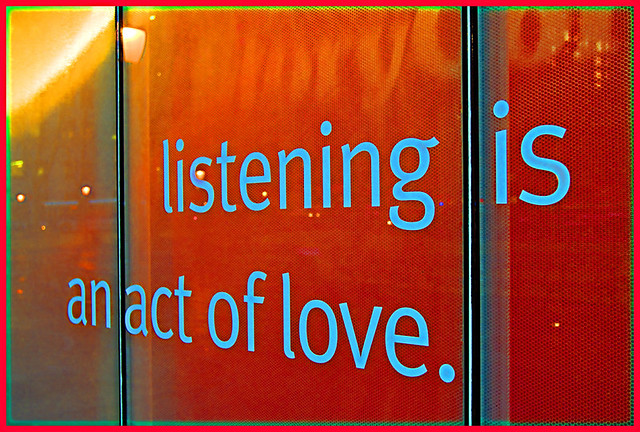
When you listen to your students talk about "nothing," it sends a signal that you'll be ready to listen to the real issues whenever THEY are ready. Think about about it on a personal level - how often do you just jump into a hard conversation with your spouse, a friend, or a co-worker? Why do expect different social exchanges from our students?

I believe that if you want to affect a students' life (or anyone's for that matter), its not so much important how much you know, or how well you do your job. No one ever claims "favorite teacher" on the grounds of their excellent lesson on systems of equations or the theme of friendship in A Separate Peace. They're not mutually exclusive, mind you, but when you're in the business of growing people as much as you are minds, you've got to win a kid's heart, first, and let them know that you're #upforwhatever they might throw at you. 

05 January 2015

First Day of Semester, January 2015: Setting Class Culture

My first year teaching, I really wanted to do this well, but I don't think I knew myself well enough as a teacher (or a person, for that matter) to do it well.

There have been some years where I jump right into math content so the kids will know that "this is a serious class."

Jumping off from last semester's classroom climate success, I feel comfortable in my "voice" to set a tone of collaboration, meaningful work, and continuous-iteration for my Applied Math class this semester. Here are my slides.


They might be a little wordy, but I've got a break after my first section, so I'll be able to be to walk my talk, live "beta" and edit it before the rest of my classes for the day. 

23 September 2014

Have You Heard of "Twice Exceptional" Students?

I read this account (via Quartzof a NYC public school student who is exceptionally gifted intellectually, but (in part because of his intellect), was really struggling with attention on class, interacting with and understanding his peers emotionally, and otherwise doing "school" activities. Ordinarily, these behaviors would sound alarm as a child probably in need of an IEP and special accommodations, but because of his strengths elsewhere, the necessity for services and supports are either masked or compensated for by the student, or ignored by his teachers.

This boy's experience was a representative anecdote for what educational psychologists are calling "twice exceptional" children - children who may be traditionally "gifted" in one area, but in desparate need for interventions and supports in areas of the school environment. (Special Ed Manual from Idaho Dept of Education) This boy's story went on to recount bullying the boy ended up enduring even in a "gifted" classroom and a general dislike and failure of school. He had taught himself to read before he was 4, but was regressing in a classroom setting he struggled to adapt to and cope with.
Do you have any students like this?
Have you ever assumed that a bright student must also work well and lead in a group setting? If you've seen the Steve Jobs biopic or are familiar with his story, you've experienced this fallacy)
Have you ever been surprised that a student on your IEP list in a co-taught special ed classroom might be need the most support emotionally or behaviorally, but ALSO be the most gifted intellectually? (That IEP stigma can stick hard, can't it?)
Do you ever find yourself giving "gifted" students a free pass on other aspects of learning and growth? 

Thinking through my own experience working with these students (and maybe even reflecting on myself as a student), let me share with you some tips for supporting the needs of "twice exceptional" students and engaging them in your classroom.

1. Don't assume that your "smart" or "honors" students must also have the best behavior.
Honors students may need your PBIS measures and expectations reminders, too.
If you're struggling with a student's behavior, you may be particularly frustrated that he or she isn't being a "leader" for the others. Thy may really WANT to be "good," but be unable to for some reason (and this probably frustrates the student, too.)

2. Focus on educating the WHOLE student. 
Kids that are exceptionally gifted in one subject math give up or accept that others are (and will always be) weaknesses. As the student stresses one and ignores the other, the divide between strength and weakness will only widen. Find nuggets a student can mine and go further. If you really believe that your students should be life-long learners, then no matter how bright your student may be he or she STILL has things to learn - things to learn from YOU.

3. Have a conference with parents early I'm about ways they would like to see their child receive extra support or be challenged to improve. 
Whether or not they can EXPRESS it in edu-speak, they have goals for their child's interventions. One of the most shocked/delighted reactions I can remember at parent-teacher conferences was when I told the parents of a student with a 36 on the math portions of the ACT that I was really wanting to work on his writing and communication of all the math he could perform operationally. 

4. Let the genius/crazy happen as it wants to.
Resist the urge to fit your twice exceptional students into whatever mold you want to see them in as "successful." If they're introverted, don't force group work on them. (But find ways to force interactions on them in more digestible nuggets). If your student has noise or sound sensitivities, be prepared to adapt your lecture/lesson to that student being able to isolate themselves when they're overwhelmed, but still continue learning activities. Give a student's work time to bloom and come to a full realization before you shoot it down. I've dismissed several "bad" drawings from my 4year old in this manner that after I listened to her explain it, I saw her reasoning and artistry more clearly.

5. Be proactive in your support. 
Conference ithat he student and acknowledge that you understand and are aware of their needs, but also that you have a plan of x, y, z for them as a student in your classroom and in your subject. Engage them in that journey.


11 September 2014

Declaring Racism "Over" Misses the Point for Students


My wife recently reshared this video from +FCKH8 on Facebook featuring children and teens from #Ferguson on the subject of racism and white privilege.

I actually didn't watch it until another friend had commented on the sharing from "Young Conservatives," who criticized the video for playing the race card, hypocritical claims, blame-shifting, and opportunistically "only" giving nearly 40% of the cost of the t-shirts they were selling to an organization fighting racism.

One of the most common reactions to "stop being racist," that I've seen is the declaration, "I'm colorblind. I don't see race. I treat everyone equally." I guess I get the point - this is probably often said with the best of intentions, but I believe its ignorant and naive.

It doesn't matter if white (and/or majority) people want to declare racism dead, if black (and/or other minority) people still believe they're experiencing racism. The best (because it was the hardest) lesson I've learned in my eight years of marriage is that the intentions or rationality of your actions and words matter less to someone else than your tone and the way they perceive your actions and words. "Perception is reality," my wife would calmly remind me later, after the hurt had subsided.

To say to your students that the color of their skin (and their experience in that skin) doesn't matter to you or isn't at least a consideration in the way you build relationships or consider relevance for your lessons is to belittle a part of their identity.

If your students identify with Mike Brown because he looks like them, then they identify with his story, too. You don't have to understand it, you just have to feel it. Listen to it. Let it happen.
This rings true across ethnicities. One of the least culturally responsive things I've done in the classroom occurred my 2nd year in summer school. I had about a dozen kids in an Algebra 1 class, I think consisting of all but one being African-American. Something I was proud of in that summer course was figuring out how effective making my kids take brain breaks could be. If the kids spent a good chunk of time on-task, they would get to nominate a song to be played while they did NO math for the duration. My white student was kind of disconnected from the school community in general, but the day I finally saw him feel a part of that class was on one of the last days of the session, when I forced a nomination out of him and we listened to some of his music. It happened to be "white" music (AC/DC), but the point was that in the name of being culturally responsive to the majority of the class, I burned the minority. Treating every student the same will always leave some students disconnected relationally. I never asked him directly, but even from observing his kid's demeanor, I could tell that his perception was that who he was didn't fit in with that classroom most of the summer.

Here's what I think you have to understand if you feel offended by this video - as long as some of your students perceive that the educational (and real world) experience will be different for them because of their race, you have a responsibility to at least acknowledge that racism might still be "a thing."

02 September 2014

You Should Sponsor the School Store (and Other Cockamamy Ideas)

"How come we don't have a school store, Mr. Baker?"
A senior came into class this morning, frustrated that she needed a notebook or something, yet legitimately had not been able to get it.

"Well..."
This was it - my chance to shut her down and focus on performing rotations on 2-dimensional shapes in the coordinate plane, or to grab this and run with it.
"That's a good question. I don't know. You should propose it to Dr. Hopper." I believe our building principal has a soft-spot for student-led initiatives, so I knew that a passionate plea, supported by a thoughtful written proposal had a shot.

"Hey, everyone," I got the class's attention. "Elle is proposing that we start up a school store, and we're looking for people to help with the proposal. Who's in?" A couple hands shot up, but they didn't know what they were actually volunteering for, so we settled on just one other student.

I spent the next couple minutes sharing our principal's contact info and outlining/facilitating aspects she would need to consider for their proposal. We got it to a "this baby is yours now; run with it" place, and resumed class, but I fully intend to return to this proposal if/whenever it comes up again.

"Tell Dr. Hopper, I will sponsor you," I told the school-store team. (Which sounds crazy for a father of 3 that's already on 3 committees and mentoring a first-year teacher). But I meant it. And not because I think they won't follow through.

We ache and plea for chances to inject "relevant" work into our math classes, and time to develop "real-world" problems to include in our unit instructional plans, but how often do we ignore the opportunities right in front of us because they might fail?
What would your students come up with?
Maybe the school store isn't going to be your students' idea, but I think this list applies to most ideas your students might need help getting off the ground. When you agree to come alongside a student-led initiative and mentor the process you're sowing a bountiful harvest of "teachable moments" and "relevance." Even if the school store idea doesn't go any further than writing the proposal, look what I'll already have the opportunity to model for my students:

  • Professional, formal writing
  • Organizational planning
  • Digital media creation
  • Collaboration
  • Budgeting
  • Problem solving (and anticipating new problems)
  • Figuring out what math fits into a given scenario and how it can support our case or help in another step of our plan
  • Revision/Draft process of writing

I have a motto for myself this year, and I made a sign that is taped outside my door: "I am an ally." A friend asked me last week what it meant, what was I fighting against. I told her, "I'm fighting for kids who need someone to care for them. Kids who need someone to listen. Kids who need an advocate. Kids who need someone to stand with them. I think its going to mean different things to different kids. I don't even have to agree with them all the time (USA and USSR in World War II, anyone?)."
I have no idea where this ally gig is going to lead the rest of this year, and no one else has even asked me about the sign, but if for no one else, I know, for MYSELF, that I committing to supporting cockamamy ideas as much as I have capacity for.

13 June 2014

#MOEDCHAT Blog Challenge #1 - I love being an educator because...

...of all the different experiences I have as a part of my job!
We try on different jobs and authentic experiences in attempts to prepare our students for the same. One trick to engaging your students is to pour yourself into your content to find your own passion for it. Like the method actor smoking a pack a day to play a lung cancer patient, diving into the same inquiry you desire for your students will enable you to know where you can look forward to pulling out particular students' interests in tour lesson for the day.


I spent 5 hours at the Ameren Corporation's headquarters on Tuesday shadowing different engineers and accountants, soaking up anything I could about the nature of their job and stealing (j/k, totally respectfully asking if I could have or take pictures of) whatever artifacts I could. It was a VIP treatment a randomly selected Ameren customer could probably not enjoy, but because of a STEM project based learning program I'm a part of right now, they opened their doors to us.


I've spent the last two days working with two of my co-teachers attempting to communicate to them the various ways I saw statistical graphs and analysis applied and we've worked together attempting to repackage that experience in a meaningful, approachable way for our future 9th graders. My co-workers weren't at Ameren with me, so I spent much of Wednesday showing artifacts and play-acting to bring them into my world. Co-teaching or PLC tip: If you cannot communicate your passion for a project or reason for pedagogical choice, you're going to have a hard time building consensus in the group, which means you won't get anything meaningful done. 

Your students don't expect you to necessarily have the same knowledge base as a best selling author, biomedical research physician, electrical engineer, or civil-rights historian, but they do have a right to fair expectation that you might teach with a similar passion as one. I'm guilty of not making nearly the attempt I could to bring in guest speakers, but having one for every standard is obviously impractical, so your students are relying on you to let them know why "insert-content-here" is worth committing their interest to.

...of the intangible value I place on knowing that being excellent at my job is important for more than increasing trading prices for public shares.
If that actually is your job, please don't feel like I'm getting judgey-mcjudgerson on you for it. That essentially was one of the tasks for one of the men I met at Ameren on Tuesday, and I found his passion for crunching statistical data to squeeze out trends infectious. He actually reminded me a lot of my father-in-law in the way that half of the work he did was not even his job, per we, but it was work he initiated to go the extra mile to add value to what he offered the organization because he had time left over after his regular work. That work he does investigating ways to lower the standard deviation of department expenditures to increas budget efficiency, and tracking customer satisfaction against a sample of Ameren's peers is important to a lot of people, I'm sure, but the exponential value a teacher can add to the world has a greater potential for good that appeals to me. 

That Ameren "continuous improvement analyst" didn't know how to do what he did with stats without an educator mentoring him through his postgraduate studies on his way to a PhD in Statistics. Somebody call Ashton Kutcher, is that a butterfly effect?

There's a question on the Gallup teacher insight survey that asks you to rate your agreement with this statement: "Teaching is the most important of all professions." I tend to get TOO meta on these surveys and overthink them, which means I factor way too many value-adding variables into this question, and I don't really come to a conclusion. Even in the last 10 minutes, I've convinced myself to both ends of that spectrum. I can get value and satisfaction out do ANY job if I do what I do to the glory of God. If your job sucks the life out of you, it probably means you're not contributing any passion to it. So, if any job can fulfill you with intangibles and an opportunity to please God, then teaching wouldn't necessarily be most important. No job would be. At the same time, as I thought about Ashton Kutcher as his Butterfly Effect, I remembered that any valuable learning needs some element of mentors hop or facilitating which means before you go and do any other work for God, a teacher was there to show you how.

...of the toys I get to play with that I generally would probably not have access to.
Many, many classrooms had interactive whiteboards and touchscreens before national news media began finding new ways to color election maps with them in 2010.

The iPad I've been using the past two and a half years was on loan to me from my district with the expectation that I would become an expert and investigate all the ways our students could use them in the future (or even if, perhaps, they were actually a poor choice to us with my students)

...of the things I have learned about for my job that I probably wouldn't know otherwise (and that make me a better friend/citizen/parent/husband)
how to talk to kids when you've let them down
how to talk to kids after they've disappointed YOU
why the way you respond in conflict is important because it doesn't go away (at least until the end of the semester.) :)
letting people know you're willing to listen to their concerns builds trust
sharing your life with people invites them to share with you
you cannot wait for the other person to ask to be forgiven - how you choose to respond should not be contingent upon their "worth" of it.

...of the number of people you can meet and small-talk with in public. 
For better or worse, everyone has an opinion about the teaching profession. And in a sense, it is unique among jobs in that everyone has spent years of their lives in direct observance of the profession, and that there are elements of the profession most of the general public practices. You may not be a "certified teacher," but you've probably tutored a friend or family member in at least one particular skill. That being said, you meet someone in public and reveal your secret identity as a teacher, you automatically have a common experience with someone beyond your burrito. 

During my jury-duty lunch break last week in Clayton at Chipotle, a gentleman on his 60s randomly started up a conversation with me while we were on line, and we ended up sharing the better part of 45 minutes together talking education. Being a teacher is like owning a Honda.

Source


31 May 2014

(How to) Start A Classroom PBIS Lottery

"Menos cinco," I heard my Spanish teacher call out time and time again after I was talking or otherwise off task. My teacher had started a behavior point system because of a handful of us sophomores with impulse control issues. I don't know if there was a set list of behaviors that warranted "menos cinco," or if it was just anytime we were disruptive, but if the tactic was aimed at me in particular, it was quite unsuccessful. 

I heard recently on a +Freakonomics  podcast about a recent trend by economists to attempt to modify behavior using lotteries that participants "paid" into with appropriate behaviors. (http://freakonomics.com/2010/11/18/freakonomics-radio-could-a-lottery-be-the-answer-to-americas-poor-savings-rate/)
A bank offered "Save to Win" savings account and attempted to get owners to put more money in their accounts by giving them a ticket each time they made a desposit. Whatever money they deposited was still theirs to keep, (as opposed to traditional lotteries that aim to raise revenue from profits - education in my home state of Missouri), and anyone that entered the lottery by saving into their account had a chance to win. In the study, there was a statistically significant increase in deposits during the lottery period.

On the heels of one of the least motivated group of students I've had in class, I wondered, "Could you get the same effect in a classroom? Could I provide incentives to get more students to do the things they should be doing anyway (completing homework, helping peers, bringing materials, staying on-task, asking questions, etc.) that would cost me nothing?


INCENTIVES
What do your students most often ask for or want? Here's a quick list for my band of brothers:
Hall passes
Homework passes (assignment excused)
Free time
Candy
Supplies (paper/pencil/calculator)

OPERATIONS
There are a few things you'll have to decide:
How will students get tickets?
What will you use for tickets? (Ready-made raffle tickets? Handmade and photocopied? Digital entires via a Google form?)
Who will keep track of tickets?
How long will you go between pulling winners? 
Could an individual student give his "winnings" to another student?
Can students operate "office pool" style and split the winnings (assuming the incentive is something that could quantifiably be broken)
Is there anything a student could do to lose tickets? (If you're doing this true PBIS style, this would have to be "no, there are no punitive consequences")

WHY DOES THIS MATTER?
Some kids are going to find ANY reason to sit and do nothing (and drag their peers along with them) but for the kids that need DAILY feedback or praise, and the kids who are less motivated by "get a good grade on this week's quiz," a PBIS lotto to give out something that may not even cost you a cent is worth a try.

HOW IS THIS DIFFERENT THAN A CLASS STORE, WHERE KIDS BUY THINGS YOURE GIVING AWAY AS WINNINGS WITH TEACHER-BUCKS THAT THEY'VE EARNED?
It will probably look rather similar to a currency-based system, but with at least one distinction. When  I was trying to earn Mole Dollars in my Chemistry class, once I got the notion that what I really wanted was going to be out of my reach of my potential income, I stopped caring about earning mole dollars. I would either give them to friends or just shove them into my chem folder without thinking about them any more until the next stray mole-earning event.

Granted, even in a lottery system, those that earn more tickets have a higher chance of winning, but anyone with a ticket still has a shot. If you follow the NBA draft lottery, you know the Cleveland Cavaliers could tell you that even the improbable happens sometimes. (They were recently awarded the first pick in this year's draft while holding the least probably of winning the lottery of all the teams participating.)

The same trait of traditional lotteries that makes otherwise rational people spend money on a chance instead of saving it to buy tangible goods will give some of your student who might otherwise check out that day a chance to win. 

Who doesn't like feeling like a winner? :)