Showing posts with label gifted. Show all posts

06 December 2018

To My Parents (Stories from Parenting a Gifted Kid):


Earlier this month was my birthday. December 6th.

I was 36 on the 6th. That's not the "Golden Birthday," but it should be something for the mathematically minded. I have 4 kids, and as they get older, and they show off more of their personalities, strengths, and interests, I get more perspective on what it meant to be my parents. And I appreciate the heck out of it.

Parenting a "gifted" or high-ability child has a unique set of challenges from parenting "regular" children. (Not to say that all parenting isn't challenging. It's just different. You have your struggles, my wife and I have to make the decision on whether or not you ground a 7 year old from chess because you know it'll sting as a consequence, or how much time listening to audiobooks is too much because your 9 year old needs constant language input/output.) Now that I parent gifted children myself, and teach gifted children all day, I have an appreciation for how exhausting they are. They're sneaky because they can often talk to you on a level advanced beyond a "typical" kid their age, but then they will have a regular kid-type reaction to not getting their way, or eating too much sugar, or skinning their knee, or (for my middle schoolers) drama with their friend, and you've forgotten they are only __ years old and don't know how to emotionally handle that yet or make rational decisions.

(Before I get too far into this, here's a helpful article on how you can get a handle on whether or not you think your child or student is "gifted")

Here are the traits that I most exhibited as a kid from the list linked above:

  • emotional intensity
  • intense curiosity
  • ability to concentrate on a topic for long periods of time
  • a deep fund of knowledge
  • continually asking questions
  • strong memory and recall

How did these play out in me as a child? Here are several vignettes...

As I remember, I planned my own birthday party in kindergarten. I made invitations, I gave them to my friends in class...I don't remember inviting my parents into this process. And it came to the day of the party and ONE kid showed up with his dad. The way we organize simple playdates in 2018, this seems odd, but I genuinely felt like I had this thing under control. I remember being a little bummed that a couple friends weren't there, but for the most part I just rolled with it. Me and Seth had a great time. My lack of soul-crushing disappointment seems...different. LOL (Thinking now of my oldest son's lack of social awareness.)

In 2nd grade we wrote in journals every morning to start the day. I LOVED this time. I spent a lot of my writing in the beginning of the 2nd semester being oddly obsessed with the 1st Iraq war. I willingly sat and watched the evening news, read headlines (and at least the front page text), and remember vividly listening live on the radio the night the US coalition started bombing Iraqi positions. I don't know what percentage of adults knew as much about gas masks and Patriot missiles as I did. So, because we could write about whatever we wanted, I took a break from reimagining/retelling the plot of Back to the Future and wrote about George Bush, Saddam Hussein, skud missiles, Patriot missiles, Israeli warning sirens, and gas masks. As an educator, I'm reading this 8 year old's journal assuming his parents are either in the military currently, or crazy. My parents are both Air Force veterans, but both only served 4 years and then went on to civilian careers. Props to them for letting a gifted kid lead their own learning. Also, its probably God's grace that the internet did not yet exist, or this obsession could have gotten really unhealthy.

Percussion Glockenspiel Bell Kit 30 Notes w/ Practice Pad +Mallets+Sticks+Stand
Currently in their basement, my parents are still housing an alto saxophone, alto clarinet, a percussion bells set, a flute, and a regular clarinet. None of these instruments have been played for at least 20 years, and the bells set was purchased because I got interested on evening during a Christmas cantata at our church, but they live on as a testament to the value they placed on my sister and I learning and performing music. (For those of you keeping score, the sax, clarinet and bells were mine, and my sister played the alto clarinet, flute, and also a viola.)

Answering (or at least listening to) a million questions and wonderings before Google. I'm pretty sure questions are a sign of creativity/curiosity/intelligence, and I value that in my own children, but cannot imagine having to do more than an internet search to appease their curiosity for the day.

Finding new, creative hiding spots for presents every year. I was a snoop.

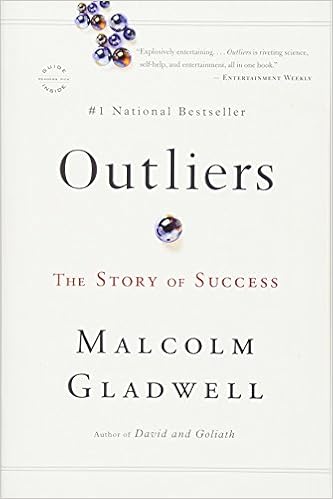
Figuring out how to keep an 11 year old safe on the internet before many adults even knew how to get on the internet. In one of my worst childhood moments, I got my dad's credit card out of his wallet one day while he was taking a nap and signed us up for AOL using the floppy drive they'd sent in the mail. That was the most 90s thing I'll write this year. The advertisement claimed we could have TEN FREE HOURS, so my too-smart-for-my-own-good self thought I did an awesome job of tracking my 10 hours, and was pretty certain I'd cut myself off before the monthly payment kicked in.  I WAS WRONG. My Dad's reaction was maybe the most surprising aspect of the story - I think he grounded me, but we kept the internet. I'm sure we'll have the conversation after they read this, but from my parenting perspective, it was a gutsy move. Exceptional people with exceptional success are usually the result of exceptional opportunity (which I learned in Malcolm Gladwell's book, Outliers, but also is learned through experience), so being introducing the web when I clearly had an interest was an investment of hope. (I went on to squander it playing Shockwave games and chatting with 6 friends at once on AOL Instant Messenger, but in a way this blog and a some of my ability to adopt/adapt technology for the classroom has its roots in that decision).


I would read my social studies textbook for fun. You know, after I'd done all of my regular elementary homework.

In 6th grade, I got a red ribbon in the school science fair, which meant I got to move on the the St. Louis County-wide science fair. My project had no photos, which as an educator is awful, but as a kid I blamed out lack of Polaroid camera. I was a science hot shot in my class, so I expected good news when we drove to the venue where all of the projects had been judged. I wandered through the gym, trying to find my project amongst the 1st, 2nd, and 3rd prize winners... but it wasn't there. It was in a side room, where the honorable mention winners picked up their ribbons. I was devastated. No kidding, I cried for at least half an hour about his "failure." (Again, as an educator, I'm questioning my school's decision to send a project that didn't have photos, but IDK.) This was the first time I fully realized some people were just more talented than I was at stuff, and it was crushing because I'd built all of my kid identity on being the brightest (or somehow justifying that I was.) Here's where my parents won this one - they were encouraging that night, letting me know it was okay, that I could try again next year in middle school, and then they just let it go. They let me decide how I was going to respond to this challenge, how much I was going to really care, and they let me own it.

Mom and Dad,
The further we get from childhood the clearer we see the patchwork of decisions our parents made that shape who we are and how we live. Sometimes we live out of response to decisions that caused us pain, and other times we adopt what they gave us because recognize the good. I find myself adopting much much more with my kids and my students than I reject. Thanks for all the opportunities. Thanks for helping me understand myself. Thanks for all the good. - cb

02 July 2018

Why Take a Course on Administrating Gifted Programs?

Full disclosure: The motivation for taking this course after already completing my coursework for gifted certification was so I can move up the salary scale in my district. I do, however, want to shout-out to Truman State University in Missouri for offering this course online!

I look forward to the targeted research and intentional reflection but have no current aspirations for administering a gifted program, so I'm just here for the learning and to be a more knowledgeable teacher-leader when we make curriculum decisions at the STEAM Academy specifically, and for gifted students in general in my school district.

This intro video details a bit of my story as an educator, my professional learning the past year, and features a cameo from my oldest son, waiting for us to go home from the summer program with Gifted Resource Council we're a part of in St. Louis.

06 September 2017

Who Are the Gifted?

A couple of notes before we begin that deserve their own posts, but I'll never get ANYTHING written if I don't just jump ahead and just throw all of the background info at you.

1. I changed schools over the summer! I've moved from teaching high school math at McCluer North High School in the Ferguson-Florissant School District, so teaching middle school at our district's new "STEAM and Gifted Academy." It wasn't really a change I planned to make, but I was drawn to the task of highlighting the exceptional things that kids from North St. Louis County could accomplish, and with having free reign to play in the project-based learning sandbox. So, new setting, with slightly different kids. I've been teaching mostly remedial math students the last few years - all of my students at the STEAM Academy have been labeled as "gifted".

2. As part of my hiring at the STEAM Academy, I had to be willing to go back to school and get a special GIFTED certification added to my educator certificate. Since I'm going to be writing and reflecting for my courses anyway, I plan on posting most of that here. Tonight's post is the first in that series


Who Are the Gifted?

I've said to friends before, and perhaps even on this blog, that I believe all children are gifted. I've said it with the best of intentions, meaning that all children can find talents and activities in which they are exceptionally skilled beyond their peers. In my definition, kids might be artistically gifted, athletically gifted, mechanically gifted, musically gifted, or even emotionally gifted (leaving room for down syndromed adults that might struggle in other areas, but man, will they love you to death!) The educator's role in this definition of giftedness was to expose students to anything and everything possible, to make sure that each and every teenager in my care had a chance to discover things in which they were gifted, and then grab that interest with all their might, using a newfound passion to exhibit how brilliant, talented, interesting, and worthy they were to society. A kid's giftedness was their path to contributing to society. 

That being said, the reading from Tracy Cross’ On the Social and Emotional Lives of Gifted Children this week was revelatory because it took aim to take my holistic approach to giftedness for all and shoot a keen arrow through the center. As I prepped for the new school year this summer, my perception of working with gifted children was that the “hard” work of getting kids to buy into learning and education was over for me, and many of my colleagues across the district also expressed that my move to the gifted school was effectively a move to a school where all of the problems of educators dealings with children and families would largely be absent.

Cross makes an explicit warning in the first chapter of Social and Emotional… that lumping “gifted” kids into categories, whether by positive attributes or negative neuroses has a detrimental effect on each individual child, and limits the child from reaching their full potential. “...we should be cautious not to impose on dominant perspective on our efforts to identify the social and emotional needs of this widely diverse group.” (Cross, 1) Later on in the chapter, Cross introduces a framework of social and emotional issues from the work of Thomas Buescher (1985) that guides the narrative beyond a rosy, all-the-gifted-kids-are-fine lens, or an all-the-gifted-kids-are-weird-and-need-socialization, to a more nuanced, fluid perspective on the needs of gifted children that are always in flux between dichotomous views about themselves and their place in the world.

The gifted are not just kids who get good grades and have been proficiently trained at school and home with the necessary skills to win the school game. They could be in that group, but they just as likely may have developed coping strategies to get through a doldrum school day that makes them appear the least likely to succeed and engage in school (Cross, 18).

Then again, who are the gifted? Cross stands firmly on a stance that in academic research and experimentation, every child is not and can not be by definition “gifted”. (Cross, 21) The most challenging section to my own definition and identification of who are “gifted” was in the chapter about myths about giftedness, and it spoke directly to my claim that “all children are gifted.” According to Cross, educators, parents, and psychologists are quick to make the statement that “all children are gifted,” because they are attaching value and worth to the label. “Giftedness is not an anointment of value. Someone who shows extraordinary ability for high levels of performance when young and has been provided appropriate opportunities to demonstrate talent development that exceeds normal levels of performance is gifted.” (Cross, 19) The error and danger that educators often fall into is assigning worth, privileges, and opportunities to gifted kids just because they are. In reaction to those first educators, well-meaning educators such as myself say in a sense, “Well, so and so deserves to feel special, too,” in a spirit of inclusiveness.

Who are the gifted? The gifted are data points are a normal curve, according to Lawrence J. Coleman (Cross, 52). They are individuals who, at a given snapshot in time had surpassed a given benchmark for knowledge in a given subject area that was higher than the average child their age. The gifted need special attention to keep them developing at their own, individual “normal,” rate, because that’s what is “normal” for that individual child. Gifted education, therefore, becomes a moral, justice-related concern because a gifted child only because “abnormal” once we try to remove them from their point along the normal curve and regress them to the mean.

In education, we teach the child where they are, when they are. The gifted are children with similar anxieties and emotional needs to others who perform at average, or below average abilities, so in that sense, we teach them with the same concern and care as all other children. To use Lawrence J. Coleman’s language, “everyone falls under this [normal] umbrella.”

23 September 2014

Have You Heard of "Twice Exceptional" Students?

I read this account (via Quartzof a NYC public school student who is exceptionally gifted intellectually, but (in part because of his intellect), was really struggling with attention on class, interacting with and understanding his peers emotionally, and otherwise doing "school" activities. Ordinarily, these behaviors would sound alarm as a child probably in need of an IEP and special accommodations, but because of his strengths elsewhere, the necessity for services and supports are either masked or compensated for by the student, or ignored by his teachers.

This boy's experience was a representative anecdote for what educational psychologists are calling "twice exceptional" children - children who may be traditionally "gifted" in one area, but in desparate need for interventions and supports in areas of the school environment. (Special Ed Manual from Idaho Dept of Education) This boy's story went on to recount bullying the boy ended up enduring even in a "gifted" classroom and a general dislike and failure of school. He had taught himself to read before he was 4, but was regressing in a classroom setting he struggled to adapt to and cope with.
Do you have any students like this?
Have you ever assumed that a bright student must also work well and lead in a group setting? If you've seen the Steve Jobs biopic or are familiar with his story, you've experienced this fallacy)
Have you ever been surprised that a student on your IEP list in a co-taught special ed classroom might be need the most support emotionally or behaviorally, but ALSO be the most gifted intellectually? (That IEP stigma can stick hard, can't it?)
Do you ever find yourself giving "gifted" students a free pass on other aspects of learning and growth? 

Thinking through my own experience working with these students (and maybe even reflecting on myself as a student), let me share with you some tips for supporting the needs of "twice exceptional" students and engaging them in your classroom.

1. Don't assume that your "smart" or "honors" students must also have the best behavior.
Honors students may need your PBIS measures and expectations reminders, too.
If you're struggling with a student's behavior, you may be particularly frustrated that he or she isn't being a "leader" for the others. Thy may really WANT to be "good," but be unable to for some reason (and this probably frustrates the student, too.)

2. Focus on educating the WHOLE student. 
Kids that are exceptionally gifted in one subject math give up or accept that others are (and will always be) weaknesses. As the student stresses one and ignores the other, the divide between strength and weakness will only widen. Find nuggets a student can mine and go further. If you really believe that your students should be life-long learners, then no matter how bright your student may be he or she STILL has things to learn - things to learn from YOU.

3. Have a conference with parents early I'm about ways they would like to see their child receive extra support or be challenged to improve. 
Whether or not they can EXPRESS it in edu-speak, they have goals for their child's interventions. One of the most shocked/delighted reactions I can remember at parent-teacher conferences was when I told the parents of a student with a 36 on the math portions of the ACT that I was really wanting to work on his writing and communication of all the math he could perform operationally. 

4. Let the genius/crazy happen as it wants to.
Resist the urge to fit your twice exceptional students into whatever mold you want to see them in as "successful." If they're introverted, don't force group work on them. (But find ways to force interactions on them in more digestible nuggets). If your student has noise or sound sensitivities, be prepared to adapt your lecture/lesson to that student being able to isolate themselves when they're overwhelmed, but still continue learning activities. Give a student's work time to bloom and come to a full realization before you shoot it down. I've dismissed several "bad" drawings from my 4year old in this manner that after I listened to her explain it, I saw her reasoning and artistry more clearly.

5. Be proactive in your support. 
Conference ithat he student and acknowledge that you understand and are aware of their needs, but also that you have a plan of x, y, z for them as a student in your classroom and in your subject. Engage them in that journey.